London Bridge Property & Area Guide
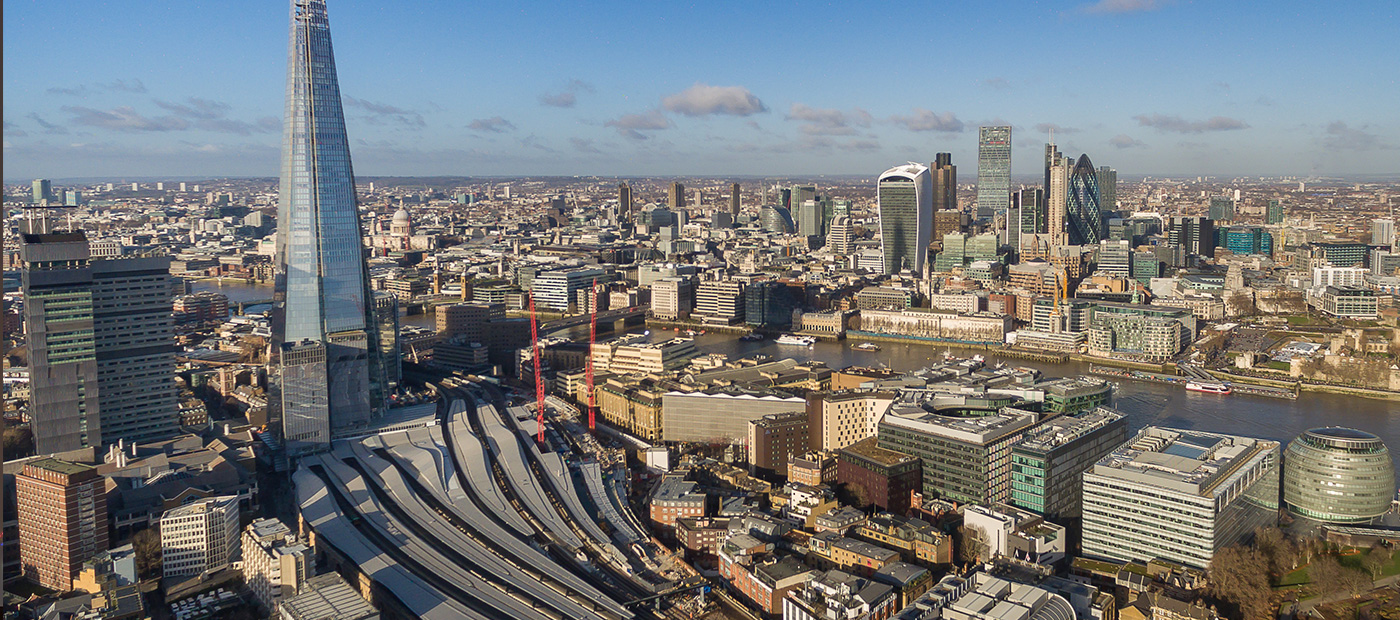
Skyscraper The Shard London by dronepicr is licensed under CC BY 2.0
London Bridge is one of London's most historic areas. It sits on the south bank of the Thames in Southwark, where the bridge connects the City of London with Southwark in central London.
The area sits alongside the Pool of London, the stretch of river immediately below the bridge that was once the heart of the capital's docks, and getting across the city from here is very easy. Its mix of old and new has made London Bridge an increasingly popular place to live, and apartments in London have been particularly desirable for the last few years.
Living in London Bridge puts you in the middle of London’s heritage, surrounded by unique properties and great attractions, with transport links to match.

Properties in London Bridge
The London Bridge Property Market
London Bridge is one of the most sought-after areas to live in London. Across Southwark, the average property price was GBP 572,000 in April 2026, compared to a London average of GBP 553,000 (ONS and HM Land Registry UK House Price Index). Prices in London Bridge are towards the upper end of the borough range.
Several factors support property prices here, its central position and the rate of development among them, and investors in the UK and abroad see the area as a prime choice. Connectivity helps too, with great transport routes to the rest of London and beyond.
So do the landmarks. Tower Bridge, Borough Market, Southwark Cathedral and The Shard are all here, and significant regeneration has brought new developments to the area.
Property Types in London Bridge
London Bridge is mostly flats and townhouses, with flats making up the bulk of the market. They range widely in size, age and specification, from converted warehouse space to new-build apartments in the towers around the station, and many buyers and renters favour them for their lower price and maintenance, though the limited outdoor space and shared communal areas put some people off.
At the upper end, the newer riverside and tower developments tend to be larger and higher spec, often with balconies or terraces. Those features help achieve higher rental values and resale prices, so they can be strong investments. These schemes usually carry higher service charges, and that affects overall affordability if you’re buying.
Townhouses are the option if you want more space. Gardens or courtyards are typical, and the generous living space gives families plenty of room, though the price tag is generally higher and they may need more maintenance.
Which of these suits you comes down to budget, lifestyle and preference. Some buyers and renters prioritise affordability, others space or amenities, and the range of property here covers all of it.
The architecture in the area covers Georgian buildings from the 18th century which bring a classical elegance, Victorian which often has eclectic touches such as bay windows and decorative brickwork, Edwardian buildings that blend tradition with newer elements like stained glass windows, and though Art Deco, the style of the 1920s and 30s which is a little rare. Around the station, modern designs dominate, all sleek lines, glass and steel.
Buying Property in London Bridge
London Bridge appeals to property investors.
Renting is popular in the area. Average private rents across Southwark stood at GBP 2,394 per month in May 2026, up 1.6% over the year, against a London average of GBP 2,294 (ONS).
Demand is another factor. The location and community support it, and the range of property types helps keep it steady, so tenants for investment properties are easier to find.
Renting Property in London Bridge
London Bridge is a great area to rent in. The practical draw is the commute, with its central location putting the City of London and Canary Wharf within easy reach on strong transport links, but the appeal goes beyond practicality. The community is a lively one, full of shops and places to eat, with diverse housing options and amenities that suit families.
Housing runs from flats and townhouses to converted warehouses, across a range of budgets. Rents sit above the London average, as they do across most of central Southwark, but good schools help make it a family-friendly choice.
Buildings of Significance in London Bridge
Southwark Cathedral is the oldest Gothic church in London. It sits immediately beside Borough Market, with parts of the structure dating from the 13th century.
In the City, across the river, the building at 33-35 Eastcheap is Neo-Gothic, with pointed arches, ribbed vaults and intricate tracery.
A short walk across Tower Bridge, you'll also find the Tower of London, where the White Tower is an example of Romanesque architecture. The style was popular in Europe between the 9th and 12th centuries and includes rounded arches, barrel vaults and solid, fortified walls.
Across the Millennium Bridge from Bankside stands St Paul's Cathedral, Baroque architecture from Sir Christopher Wren.
London Bridge Schools
The London Bridge area is home to several great schools, including:
City of London School – is an independent day school for boys aged 10 to 18, funded and managed by the City of London Corporation and located across the river on Queen Victoria Street. Its origins lie in a bequest of land by John Carpenter, Town Clerk of London, on his death in 1442, and the school itself was established by Act of Parliament in 1834. Most pupils enter at 11.
St Paul's Cathedral School - is an independent, co-educational preparatory school for boys and girls aged 4 to 13, on New Change beside St Paul's Cathedral. The choir school dates from about 1123, when eight boys in need were given a home and an education in return for singing the cathedral office, making it one of the oldest schools in London. Boarding is provided for the cathedral choristers.
London Christian School – is an independent, co-educational Christian primary school near London Bridge, established in 2007, offering a diverse and balanced curriculum for pupils aged 3 to 11.
Tower Bridge Primary School – is a state-funded primary school on Fair Street providing education for boys and girls, with a positive local reputation. It is one of three schools in The Bridges Federation, alongside Snowsfields and Robert Browning, which became a permanent partnership in September 2015.
Charles Dickens Primary School – is a state-funded primary on Toulmin Street, now an academy within The Charter Schools Educational Trust. It is home to the London South Teaching School Hub, which works in partnership with the University of Roehampton to train and develop teachers across south London.
Since September 2024, Ofsted no longer gives state schools a single overall grade. Inspections from November 2025 produce a report card grading separate areas on a five-point scale. For more up to date ratings, please check the current report for each school.
London Bridge Regeneration Information
Past Regeneration Projects
The area has seen significant regeneration in recent years, none as obvious as The Shard. The 95-storey skyscraper, 72 of them habitable floors, stands in the London Bridge Quarter and was planned by property entrepreneur Irvine Sellar as a multi-purpose building, a major hub of activity in its own right. Construction started in March 2009 and the steel structure was topped out on 30 March 2012, completed when a 66-metre spire weighing 500 tonnes was winched into place to bring the height to 308.7 metres. The final 516 glass panes took the tower to its full 309.6 metres, which ranks it as the UK's second-tallest freestanding structure, surpassed only by the 330-metre concrete transmission tower at Emley Moor.
Architect Renzo Piano drew the distinctive design from riverside railways, London's historic spires as shown in Canaletto's paintings, and the masts of sailing ships. The Shard houses offices, homes, public spaces, a hotel, and a public observation gallery offering views of up to 40 miles. Not everyone approved. English Heritage opposed the building, concerned about its impact on the historic London landscape, and that criticism is where the name The Shard came from.
London Bridge station itself was rebuilt as part of the GBP 6.5 billion Thameslink Programme, expanding its capacity and reopening with a new concourse and bus station.
Regeneration Projects in London Bridge
The London Bridge area continues to change, guided by two main strands of planning and placemaking work:
- The New Southwark Plan and London Bridge Area Vision: Southwark Council's adopted planning framework sets out a vision for London Bridge as a central London business district alongside a new town centre. Alongside it, the council consulted on a social regeneration charter with eight commitments covering youth facilities, community space, council housing, local employment, open space and air quality.
- The London Bridge Plan: a strategic vision produced by Team London Bridge, the area's Business Improvement District, following consultation with more than 300 local businesses. Its aims include improving the public realm, prioritising pedestrians and cycles on Tooley Street and St Thomas Street, and supporting the Low Line walking route along the railway viaduct.
Between them, these initiatives are expected to bring jobs and investment into the area and to improve quality of life for residents and visitors.
London Bridge Community
Several organisations and initiatives actively support community life in the area.
- Borough and London Bridge Neighbourhood Community Plan: Southwark Council's engagement hub for the area, where residents can share ideas, take part in consultations such as the Streets for People street improvement programme, and find funding opportunities for local projects.
- Team London Bridge: the Business Improvement District for the area, representing more than 300 businesses between Borough High Street, Tooley Street and the river. It runs public realm and place-making projects and offers funding, marketing support and networking to local organisations.
- London Bridge City: the riverside estate running from London Bridge to Tower Bridge, taking in Hay's Galleria and More London. Its events and community programme are a useful source of information on what is happening along the Queen's Walk.
Transport Information
London Bridge has excellent transport links to the rest of London and beyond. These are the main options in the area:
- Trains: London Bridge is a major National Rail hub served by Southeastern, Southern and Thameslink. Direct services run to Kent and East Sussex, including Sevenoaks, Tunbridge Wells, Hastings and Dover; to Brighton and the south coast; north to Bedford, Cambridge and Peterborough; and to Gatwick and Luton Airport Parkway. Blackfriars and Cannon Street are separate mainline stations, a short walk away or one stop by train.
- Underground: London Bridge station is served by the Jubilee line and the Bank branch of the Northern line, connecting to Canary Wharf, the West End, the City and King's Cross St Pancras. Southwark station on the Jubilee line and Borough on the Northern line are both within walking distance.
- Buses: London Bridge has an extensive bus network, with the bus station beside the mainline concourse serving a wide range of destinations across central and south London.
- DLR: the Docklands Light Railway does not serve London Bridge directly, but Bank, Tower Gateway and Shadwell are all a short journey away and provide quick connections to Canary Wharf and the wider Docklands.
- River: London Bridge City Pier is a few minutes' walk away, with Uber Boat by Thames Clippers services along the river.
London Bridge suits buyers after a unique apartment or a spacious townhouse as much as investors looking for a prime opportunity. The rich history and famous landmarks are part of daily life here, and the schools are good. Contact our team today to find your perfect home in London Bridge.
Things To Do in London Bridge
London Bridge inspired the famous nursery rhyme “London Bridge is Falling Down”, which has origins in the medieval period and has been passed down through generations. What it actually means is still debated, but the rhyme is now part of the area's cultural heritage.
The Clink Prison Museum on Clink Street lets you see the harsh conditions of one of the oldest and most infamous prisons in England, with interactive exhibits and informative displays along the way.
Borough Market, immediately beside Southwark Cathedral, is one of London's oldest and largest food markets, with more than 100 traders selling produce, cheese, meat, fish and prepared food.
The Shard offers shopping and dining across several floors, and The View from The Shard observation deck on the 72nd floor sits 244 metres above the street.
On St Thomas Street, the Old Operating Theatre Museum and Herb Garret holds the oldest surviving operating theatre in Europe, built in 1822 in the roof of the old St Thomas's Church and reached by a narrow 52-step spiral staircase.
For a walk, the Thames Path along the Queen's Walk runs from London Bridge past Hay's Galleria and City Hall to Tower Bridge, taking in some of the best views of the river and the City skyline.