Rotherhithe Property & Area Guide
Rotherhithe lies within the London Borough of Southwark in south-east London. It is part of the Docklands and is located on the southern bank of the Thames, directly across the river from Wapping and the Isle of Dogs.
This guide covers Rotherhithe's history, available property types, local amenities and attractions, transport links, and the benefits of living in the area.

Properties in Rotherhithe
Rotherhithe Property Market
Regeneration in the 1980s turned this industrial and maritime area into a modern riverside neighbourhood. In the London Borough of Southwark, the average property price was £572,000 in July 2026, which was flat over the year at 0.1%. The London average of £550,037 fell by 3.3% over the same period (ONS and HM Land Registry UK House Price Index). Prices in Rotherhithe are well below those in Bankside and London Bridge, which are closer to the City, and that appeals to buyers who want to live by the river without paying central London prices.
Location is a big part of Rotherhithe's popularity. Its position on the Thames, with fast connections into the City and Canary Wharf, adds to its appeal for buyers.
Riverside living is another major draw. The area is along the Thames, offering residents open views, waterfront walks and a setting that feels a long way from the traffic of central London.
There is also a strong sense of community here. Local groups run events and projects through the year, and several of them are long established. That community feel adds to Rotherhithe's appeal.
Green space adds to the appeal, particularly for families. Southwark Park, Stave Hill Ecological Park and the dockside walks give the area a mix of green space and city access that is hard to find this close to the centre.
Property Types in Rotherhithe
There is a good mix of homes in Rotherhithe, from waterside apartments to family houses on quiet residential streets.
Property here is varied, with luxury waterside apartments alongside more affordable one and two-bedroom flats and houses. Higher-end homes are often close to Canada Water, with its green spaces and walkways, and many are in purpose-built or new-build blocks with CCTV and secure entrances. Many of the most sought-after properties in Rotherhithe are along the banks of the Thames or overlooking the former Surrey Docks. More affordable homes also have good transport links and can be found in converted houses and ex-council flats.
Rotherhithe is also home to period townhouses, converted warehouses and modern developments. Modern properties include terraced housing with gardens and apartments in converted industrial buildings, and there are fewer high-rise blocks than in other regenerated areas such as Canary Wharf. Victorian and Georgian townhouses reflect the area's history, with distinctive architectural features and the generous interiors typical of both eras.
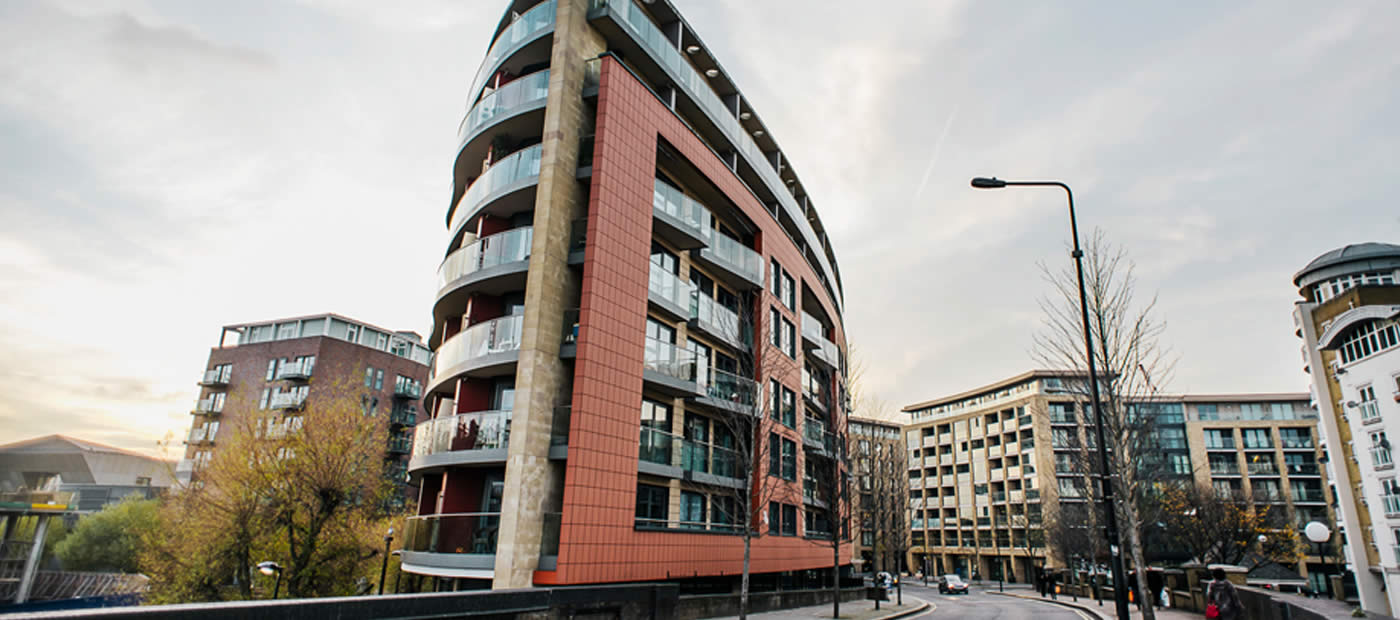
Rotherhithe's most sought-after homes sit along the waterways and the river. Here, you will find wharf buildings converted into spacious loft-style apartments, many of them on Rotherhithe Street and around Surrey Quays Road. Private balconies with views over the docks and the river are common, and some conversions are glass-fronted.
There are also new contemporary apartment blocks, with some of the best examples on Quebec Way. These sit beside Stave Hill Ecological Park and its wildlife reserve.
Living in Rotherhithe is not all about apartments. The area also has family houses with private gardens and off-street parking. The streets off Redriff Road have semi-detached and detached two-storey family homes in quiet cul-de-sacs, and there are further family streets in the north of Rotherhithe between Surrey Water and King's Stairs Gardens. This offers a lifestyle more commonly associated with the suburbs than with somewhere this close to central London.
Buying Property in Rotherhithe
Rotherhithe has changed substantially from an industrial port into a green residential area. The redevelopment, especially around the historic docks, has made it a popular choice for buyers and investors. The former docks are now sought-after locations for homes and public space.
Ongoing regeneration also attracts investors. New-build properties, including four and five-storey apartment blocks along the docks and the Thames, continue to change the area.
New-build homes also give buyers and renters more choice. Some developments also include shared ownership, which can appeal to first-time buyers looking for a well-connected location.
Renting Property in Rotherhithe
Rotherhithe is popular with renters because of its transport links and proximity to Canary Wharf and the City of London. Average private rents across Southwark reached £2,474 a month in August 2026, up 5.4% over the year, against a London average of £2,332 (ONS). Rents have risen faster than prices here, which is worth considering for anyone deciding whether to rent or buy.
Location is a major factor. With Canada Water, Rotherhithe and Surrey Quays stations all within walking distance, renters have quick routes to both main employment centres. Canada Water is one Jubilee line stop from Canary Wharf, making it a short commute.
Notable Buildings in Rotherhithe
Rotherhithe has several buildings of historical significance.
A prominent landmark is St Mary's Church, a parish church which dates back to the 12th century. It has a direct connection to the Mayflower through Christopher Jones, the ship's master and part-owner, who died in early March 1622 and was buried here.
Another historic building is The Mayflower, believed to be one of the oldest pubs on the Thames. It has connections to the Pilgrims' journey and remains a reminder of Rotherhithe's maritime history.
The Brunel Museum is housed in the Brunel Engine House. It is part of the infrastructure for the first tunnel under the Thames, designed by Sir Marc Isambard Brunel. The museum explains the area's industrial past and the tunnel's place in the story of the Underground.
Rotherhithe Schools
There are a few schools in and around Rotherhithe:
- Albion Primary School which is on Albion Street, is a community primary for ages 3 to 11, was judged Good at its inspection in January 2024, with personal development rated Outstanding.
- Peter Hills with St Mary's and St Paul's CofE Primary School on Beatson Walk, judged Good at its inspection in July 2022, with behaviour and attitudes and personal development both rated Outstanding.
- Rotherhithe Primary School on Hawkstone Road has been an academy for ages 3 to 11 since October 2023.
- St Michael's Catholic College in nearby Bermondsey, is a secondary school with a sixth form. It was rated Outstanding in all five areas at its inspection in April 2025, which was the third consecutive time it has achieved that rating.
- BOSCO Centre on Jamaica Road, an independent learning provider offering post-16 and vocational courses, was judged Good in December 2023.
Inspection arrangements changed in September 2024, when Ofsted stopped giving state schools a single overall grade. Inspections from November 2025 produce a report card that grades separate areas on a five-point scale, so it is worth checking the latest report for any school you are considering. You can search current reports and school details through Get Information about Schools.
Rotherhithe Regeneration Information
Past Regeneration Projects
In the 1980s, the Rotherhithe riverfront was redeveloped, largely for housing. That work combined repurposed warehouses with new construction and formed part of the wider redevelopment of the Docklands, converting former industrial land for residential and commercial use. This followed the decline of the dock industries, which had left large parts of the Docklands underused.
The plans aimed to create a mix of homes and businesses. They created new homes, offices, shops and leisure space while keeping much of the area's historic character. That mix of renovated warehouses and contemporary buildings, Rotherhithe became an established residential and commuter district.
Regeneration Projects in Rotherhithe
The Canada Water Masterplan is creating a new town centre on a 53-acre site on Rotherhithe's western edge. It is a joint venture between British Land and AustralianSuper, working with Southwark Council, and it is consented for around 3,000 new homes alongside workspace, shops, leisure and public space, with around 20,000 jobs expected on completion.
A revised version of the master plan was approved at a City Hall hearing on 27 March 2026. It increased the height and massing of the residential buildings. It also changed how affordable housing is delivered, setting 20% as the affordable requirement in the next phase and a minimum of 9% across the whole development. Southwark Council said it was disappointed with those levels and will use the scheme's review mechanisms to seek more social rented homes if viability improves.
The first phase is complete. It delivered 186 homes at The Founding and 79 affordable homes at 7 Roberts Close, along with workspace at Paper Yard, Dock Shed and Three Deal Porters, a new leisure centre for Southwark Council, restaurants, and the revitalised Canada Dock and surrounding public realm. The next phase is expected to start on site in 2027.
The development has also contributed to local transport improvements, contributing £13 million towards the improvements at Surrey Quays station and £2.6 million at Canada Water station.
Canada Water Library, which opened in 2011, is in the centre of the area and includes learning spaces, meeting rooms and a small theatre alongside the lending library.
Rotherhithe Community
Several active local groups contribute to community life in Rotherhithe.
- Southwark Park Association 1869 is a voluntary organisation that promotes and protects Southwark Park and King's Stairs Gardens, working in partnership with the council and other local bodies. It takes its name from the year Southwark Park opened.
- The Rotherhithe Community Gardening Network brings local growing and gardening groups together to share skills and improve green space across the area. It is hosted by Surrey Docks Farm and launched in 2021.
- The Rotherhithe Neighbourhood is one of ten neighbourhood areas Southwark Council introduced in 2025 to replace its former ward-based structure. Each has a neighbourhood champion councillor, a community plan and access to the Neighbourhoods Fund, and residents can get involved through regular neighbourhood community meetings.
- The Rotherhithe and Bermondsey Local History Society preserves and shares the area's heritage, giving residents a way to engage with local history through talks and publications.
Transport Information
Rail and Underground
Rotherhithe has three stations, all in Zone 2, though only one of them is on the Underground.
- Canada Water is the main interchange. It is on the Jubilee and Windrush lines of the London Overground, putting Canary Wharf one stop away, with quick journeys to London Bridge and the West End.
- Rotherhithe station is on the Windrush line, connecting north to Wapping, Shoreditch High Street and Highbury and Islington.
- Surrey Quays station, to the south, is also on the Windrush line, with services towards New Cross, Clapham Junction, Crystal Palace and West Croydon. A new station entrance with step-free access to both platforms opened on 11 September 2026.
The Windrush line was named in November 2024, when the London Overground was divided into six named lines. It was previously known as the East London line.
Bus
Rotherhithe is served by routes 1, 47, 188, 199, 225, 381, C10 and P12, with night services on the N1, N199 and N381. Canada Water bus station is directly above the station and is the main hub. Buses stop at Salter Road, Rotherhithe Street, Surrey Quays Road, Rotherhithe New Road, Trundleys Road and Evelyn Street, among others.
River
Two piers serve the area. Greenland (Surrey Quays) Pier is on the Uber Boat by Thames Clippers RB1 and RB6 routes, running west towards Tower Bridge, London Bridge and the West End and east towards Greenwich and Woolwich. Rotherhithe Pier, formerly known as Nelson Dock Pier and Doubletree Docklands Pier, serves the RB4 cross-river route to Canary Wharf.
Contact our team for more information about the property in Rotherhithe.
Things To Do in Rotherhithe
Southwark Park is the largest open space in Rotherhithe. It opened in 1869 and covers 63 acres, with a bandstand dating from 1884, an art gallery, a boating lake, a cafe, formal gardens, sports pitches and a playground. The park is protected by Fields in Trust through a legal deed of dedication, which safeguards it as public recreation land.
Other green spaces include Stave Hill Ecological Park and Lavender Pond Nature Park, both managed as urban ecology sites by The Conservation Volunteers, along with Russia Dock Woodland, the riverside park at Durand's Wharf and King's Stairs Gardens beside the river in the north of the district.
Surrey Docks Farm on Rotherhithe Street is one of London's first city farms. It covers around two acres on the river opposite Canary Wharf and is free to visit, with livestock, gardens, a cafe and a regular programme of community activities.
There are several dock areas to explore, including South Dock Marina, Greenland Dock and Surrey Water. These redeveloped stretches are good for a walk and have cafes, bars and restaurants nearby.
For a drink, The Mayflower on Rotherhithe Street is a traditional riverside pub with a wooden deck over the water, and the family-friendly Salt Quay, further along the same street, is known for its Sunday roast.
The Brunel Museum, beside Rotherhithe station, tells the story of the Thames Tunnel and is worth a visit for anyone interested in how the area was built.