SE16 Property & Area Guide
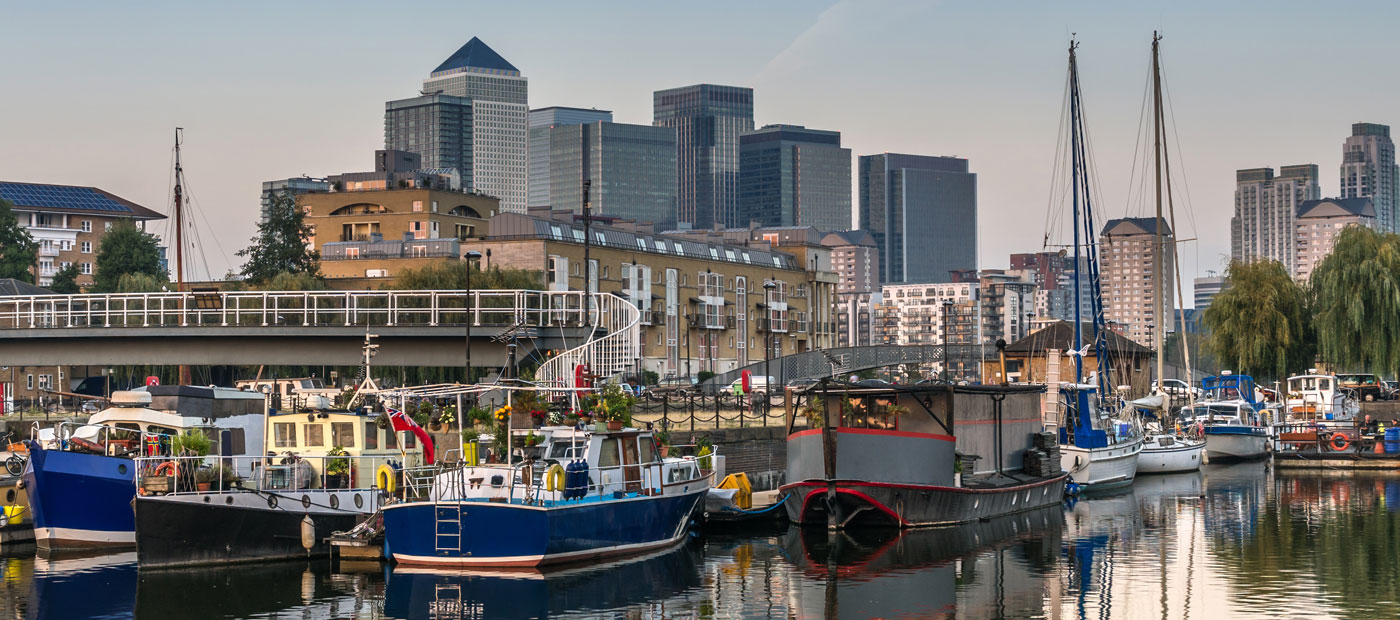
SE16 covers the Rotherhithe peninsula and much of Bermondsey, within the London Borough of Southwark in south-east London. The River Thames wraps around three sides of the peninsula, putting the postcode directly across the water from Wapping and the Isle of Dogs. Its main neighbourhoods are Bermondsey, Rotherhithe, Canada Water and Surrey Quays.
This guide covers the SE16 property market, the property types street by street, schools, the regeneration under way, community life, transport and what there is to do locally.

Properties in SE16
SE16 Property Market
Across the London Borough of Southwark, the average property price was £572,000 in July 2026, broadly unchanged on the same month a year earlier. That’s well above the London average of £550,000, which itself fell from £569,000 over the year, and is more than double the England average of £273,000. Figures are from the Office for National Statistics and are provisional for the most recent month.
Borough averages only take you so far in SE16. The postcode includes riverside warehouse conversions at the top of the local market, 1980s dockside new-builds, Victorian terraces behind Southwark Park Road, and large post-war estates, so prices vary widely from street to street. Anyone pricing a specific property needs to look at the building and the street rather than rely on the postcode average.
Location helps sustain demand. Canada Water is one Jubilee line stop from Canary Wharf and two from London Bridge, and the Canada Water Masterplan is building a new town centre on 53 acres in the middle of the postcode. Riverside property with that level of access to both the City and Canary Wharf is not widely available south of the Thames.
Property in SE16
The riverside defines the types of property here. Southwark Council's conservation area appraisal for Edward III's Rotherhithe describes the historic pattern as warehouses and wharves along the river frontage, with properties filling the gaps, and London stock brick as the dominant material. Many of those warehouses are now flats. Thames Tunnel Mills at 111 to 115 Rotherhithe Street is one of the better-known conversions, and New Caledonian Wharf on Odessa Street and Canada Wharf at 255 Rotherhithe Street are further east along the same frontage.
Some much older buildings also survive. Sir William Gaitskell House dates from 1814 and is built of London stock brick over three storeys with an attic and basement. Number 101 Rotherhithe Street is a mid-nineteenth century stock brick building with a coped gable end to the street. Both are listed, as are Nelson House and St Mary's Church.
Behind the river, the character changes completely. The Thorburn Square Conservation Area south of Southwark Park Road was largely built out by 1879 and is characterised by almost continuous terraces of two-storey houses in yellow London stock brick with rendered window and door dressings. Around the square itself are larger three-storey semi-detached villas from the 1860s. This is the main pocket of period terraced property in the postcode.
The area around Stave Hill and Russia Dock Woodland is different again. It was water until the docks were infilled, so the properties there are mostly 1980s new-builds and later developments, laid out around the retained waterways. Baltic Quay, between South Dock and Greenland Dock, was completed in 1989 during the London Docklands Development Corporation era.
SE16 also has many social-rented and former social-rented properties, and they shape the street pattern across much of Bermondsey and inland Rotherhithe. The Rennie Estate on Galleywall Road, the Silwood Estate on Rotherhithe New Road and the Irwell Estate on Neptune Street are among the larger ones. Not all of these are council properties. Antony House and Roderick House on Raymouth Road are two 1950s blocks of sixteen flats each owned by an association rather than the council, and permission has been granted for thirty rooftop homes above them.
New-Build Properties in SE16
Beyond the Canada Water Masterplan, which is covered in the regeneration section below, several large schemes are under way or have recently finished.
- The Bermondsey Project at 100 Clements Road, on the former Peek Freans biscuit factory site, is the largest. Greystar is delivering 1,624 homes, of which 338 are for social rent, with first occupations from autumn 2025, and the whole scheme is due to complete in the second half of 2027.
- 79 to 161 Ilderton Road is bringing 865 co-living units and 186 affordable apartments for social rent in two buildings rising to 28 storeys, developed by Wittington Investments and Fifth State, and scheduled for completion in 2027.
- Dockley Apartments at 2 Dockley Road completed in summer 2022 with 111 flats, 42 of them affordable, alongside around 11,800 sq ft of commercial space.
- The Dock Shed on Deal Porters Way at Canada Water, completed in the first quarter of 2025, provides 180,000 sq ft of workspace on its upper floors.
One thing to know if you are looking at the southern edge of the postcode is that several blocks with SE16 addresses on and around Plough Way, including Iceland Wharf, are in the London Borough of Lewisham rather than Southwark. That affects council tax, school admissions and local services.
Buying Property in SE16
The appeal of buying here rests on three things. Transport is the biggest advantage, with two Jubilee line stations, three Windrush line stations, a National Rail station and a river pier inside the postcode. Regeneration is the second, with the Canada Water Masterplan and the Bermondsey Project both adding homes, workspace and retail. The third is relative value compared with Shad Thames and the rest of SE1 to the west.
Rental demand is steady rather than seasonal, driven by workers at Canary Wharf and in the City, not by students. SE16 has no university and no further education college of its own, and Southwark College's Bermondsey campus on Keetons Road closed in 2013. It is, however, close to several institutions, with King's College London's Guy's Campus and London South Bank University both in SE1, Goldsmiths at New Cross in SE14 and the University of Greenwich in SE10, all within a few miles.
Renting Property in SE16
The average monthly private rent across Southwark was £2,474 in August 2026, an increase of 5.4 per cent on the £2,347 recorded a year earlier. Southwark is above the London average of £2,332 and well ahead of the UK figure of £1,400. These are Office for National Statistics figures for the whole borough, and rents within SE16 vary substantially by building type and by how close a property is to the river or to a station.
SE16 works well for renters who work at Canary Wharf. Canada Water is one Jubilee line stop away, and Greenland Pier at the eastern end of Greenland Dock is served by Uber Boat by Thames Clippers on the RB1 and RB6 routes, which also call at Canary Wharf. The combination of a short commute and a wide range of properties, from converted wharves to purpose-built blocks and ex-local-authority flats, means there are options across a broad range of budgets.
Notable Buildings in SE16
The Mayflower at 117 Rotherhithe Street is the building most visitors come to see, and its history is more layered than it first appears. The present pub dates from the 1780s and stands on the site of an earlier sixteenth century inn. It traded as the Shippe Inn and later as the Spread Eagle and Crown, and was renamed The Mayflower in 1957, the year of the Mayflower II voyage. War damage to the roof and top floor led to a major refurbishment that same year, which is when the sixteenth century style interior was created.
The pub has a genuine connection to the ship. The Mayflower sailed from Rotherhithe in 1620, and Christopher Jones, the ship's master and part-owner, died in early March 1622 and is buried at St Mary's Church, a short walk away. The pub has a passenger list and a visitors' book that descendants can sign. It also claims to be the only place in the UK licensed to sell United States postage stamps, sold through a small hatch beside the bar.
Two other buildings are worth noting. St Mary's Church on St Marychurch Street is the parish church and a listed building in its own right. The Brunel Engine House on Railway Avenue was built as part of the first tunnel under the Thames and now houses the Brunel Museum.
SE16 Schools
One point about Ofsted before the list. Single-word overall effectiveness grades were scrapped for state schools from 2 September 2024, so a school inspected since then has judgements in separate areas but no overall grade. Ungraded inspections give no new grades at all, only a statement that the school continues to be good. The wording below reflects what each school's most recent published report actually says.
SE16 has a good range of primary schools, with 12 state primary schools within the postcode area.
- St John's Roman Catholic Primary School on St Elmo's Road, a voluntary aided Catholic primary for ages 3 to 11, was judged Outstanding in all five inspection areas at its graded inspection on 1 and 2 April 2025.
- Ilderton Primary School on Varcoe Road, a community primary for ages 3 to 11, was judged Outstanding in all five inspection areas at its graded inspection on 24 and 25 June 2025.
- Redriff Primary, City of London Academy on Salter Road, an academy for ages 3 to 11, was judged Outstanding overall and in every area at its inspection in November 2023.
- St Joseph's Catholic Primary School on Gomm Road converted to academy status in March 2025, and its predecessor school was judged Outstanding overall and in every area in March 2024.
- Albion Primary School on Albion Street, a community primary for ages 3 to 11, was judged Good at its January 2024 inspection, with personal development rated Outstanding.
- Riverside Primary School on Janeway Street is a community primary for ages 3 to 11 and was judged Good in December 2023, with behaviour and attitudes rated Outstanding.
- Southwark Park Primary School on Southwark Park Road, is a community primary for ages 3 to 11, and was judged Good in October 2023, with personal development rated Outstanding.
- Peter Hills with St Mary's and St Paul's CofE Primary School on Beatson Walk, a voluntary aided primary for ages 3 to 11, was judged Good in July 2022, with behaviour and attitudes and personal development both rated Outstanding.
- St James' Church of England Primary School on Old Jamaica Road, a voluntary aided primary for ages 3 to 11, continues to be a good school following an ungraded inspection in July 2024.
- Alfred Salter Primary School on Quebec Way, a community primary for ages 3 to 11, continues to be a good school following an ungraded inspection in June 2024.
- Galleywall Primary, City of London Academy on Galleywall Road, is for ages 4 to 11, and was last graded Outstanding in May 2019. Its most recent inspection, in January 2025, was ungraded and did not give any new grades.
- Rotherhithe Primary School on Hawkstone Road, which converted to academy status in October 2023, has not yet been inspected under its current academy status.
For secondary education, there are four schools with SE16 postcodes, and three of them have sixth forms, so families do not have to look outside the postcode for post-16 provision.
- Harris Academy Bermondsey on Southwark Park Road, a girls' academy for ages 11 to 18, was judged Outstanding in every area, including sixth-form provision, at its graded inspection in February 2025.
- St Michael's Catholic College on Llewellyn Street, a Catholic academy for ages 11 to 18, was judged Outstanding in all five areas, including sixth-form provision, at its graded inspection in April 2025.
- Bacon's College on Timber Pond Road, a United Learning academy with Church of England character for ages 11 to 19, was judged Good overall in June 2022, with sixth-form provision also Good.
- The Charter School Bermondsey on Keeton's Road, for ages 11 to 16 and known as Compass School Southwark until 2023, continues to be a good school following an ungraded inspection in November 2022. It has no sixth form.
One point to note is that of the three sixth forms, one is girls only, and one is Catholic, so a boy looking for non-denominational post-16 provision inside SE16 has Bacon's College as the only option.
SE16 also has a specialist provider. Cavendish School at Lady Gomm House on Hawkstone Road is an independent special school for 41 pupils aged 11 to 16, all with education, health and care plans, judged Good at its inspection in March 2024.
Admission arrangements, deadlines and the online application are on Southwark Council's school admissions pages. Current details for any individual school, including its Ofsted history, are on Get Information about Schools.
SE16 Regeneration Information
Past Regeneration Projects
SE16 was dominated by docks for nearly three centuries. The Howland Great Wet Dock was laid out between 1695 and 1699 on the Rotherhithe peninsula, making it the oldest of London's riverside wet docks. Heavy use by Greenland whaling ships led to it being renamed Greenland Dock, which is still its name today.
The Surrey Commercial Docks, which grew up around it, closed in 1970, and regeneration followed a decade later. The London Docklands Development Corporation was set up by the government in 1981 to regenerate 22 square kilometres across the London Boroughs of Newham, Tower Hamlets and Southwark. It brought more than 120,000 new jobs to the Docklands as a whole, withdrew from the Surrey Docks in 1996 and was formally wound up on 31 March 1998.
The result is the SE16 people recognise today. Warehouses were converted and new blocks built along the river frontage, the infilled docks became Russia Dock Woodland and Stave Hill, and South Dock reopened in 1994 as London's largest marina with over 200 berths.
The Canada Water Masterplan
This is the largest regeneration project in SE16. British Land and AustralianSuper are building a new town centre on a 53-acre site around Canada Water, working with Southwark Council.
The Deputy Mayor of London approved a revised version of the masterplan on 27 March 2026 under a Section 73 application. British Land says that the revised scheme allows for up to 4,184 new homes, up to 2.5 million sq. ft of workspace, and around 1 million sq. ft of retail, leisure and cultural space, alongside a 3.5-acre park, a town square, and 16 new streets. The revisions increase the height and massing of the residential buildings and introduce alternative living uses. The next phase is expected to start on site in 2027.
The share of affordable properties is the part of the scheme that has changed the most. The revised masterplan sets the affordable share at 20 per cent in the next phase of development and at least 9 per cent across the development overall. Earlier approved versions of the scheme had a higher proportion, so anyone following the project should treat the affordable figures as the revised ones rather than those quoted before March 2026.
Progress is already visible. The first phase delivered the revitalised Dock Office Gardens and new wetland habitats at Canada Dock, as well as the Dock Shed workspace. The development has contributed £13 million towards improvements at Surrey Quays station and £2.6 million at Canada Water station, and more than 165 previously unemployed Southwark residents have secured jobs, apprenticeships or training lasting six months or more.
Two practical points for residents. Surrey Quays Shopping Centre is still trading, and British Land has said final demolition will not take place until the replacement Tesco Extra is built, which is unlikely to be ready before late 2028 or 2029. Surrey Quays Leisure Park, next door, has already closed. The Odeon cinema, Hollywood Bowl and Pizza Hut all closed permanently in September 2024, with tenants leaving by 18 September, and Hollywood Bowl has confirmed it will not return to the redeveloped site.
New Bermondsey
Just outside the postcode, in the northernmost tip of the London Borough of Lewisham and reached from South Bermondsey station, New Bermondsey is a 30-acre scheme centred around Millwall Football Club. The developer is Renewal, and Lewisham Council approved the scheme in December 2024.
The approved plans cover 3,500 homes, up from 2,400 in the earlier scheme, along with up to 1,250 jobs, 50,000 square metres of commercial space, a new indoor sports complex with a swimming pool, gym, multi-use halls and an arena, and 13 public spaces and routes.
Delivery of the plans depends on a station. A condition limits the first phase to 600 homes until the proposed Surrey Canal Road Overground station is built. Lewisham Council's own update says that design work will run from early 2026 to early 2028. That will be followed by roughly two years of construction, suggesting an opening around 2030. Renewal has committed £25 million towards it. Anyone buying nearby because of the expected station should treat that timetable as indicative rather than fixed.
SE16 Community
SE16 has a well-established voluntary sector for inner London, with several organisations that have been running for decades from their own premises.
- Time and Talents at The Old Mortuary on St Marychurch Street is the main community centre for Rotherhithe and Bermondsey, with free activities, volunteering opportunities and support for children, families and older residents, with a second venue at Surrey Quays.
- London Bubble Theatre Company on Elephant Lane is a participatory theatre charity running community and intergenerational arts programmes, including Speech Bubbles for primary-age children and the Rotherhithe Shed for over-55s, which it runs jointly with Time and Talents.
- Southwark Park Galleries, the charity formerly known as CGP London, runs two free public galleries and a community garden in Southwark Park with a year-round exhibition and engagement programme.
- Surrey Docks Farm on Rotherhithe Street is a working city farm offering food growing, animal care, school activities, blacksmithing and adult training, and is free to visit every day.
- Bermondsey Community Kitchen on Market Place provides free professional cookery training and City & Guilds Level 1 and 2 qualifications for unemployed 16- to 24-year-olds, listed in Southwark Council's Local Offer directory.
- The Tree Council is a national tree charity based in SE16 at the Dock Offices on Surrey Quays Road, which runs grant programmes, research, education, and a network of volunteer Tree Wardens across the UK.
Transport Information
SE16 is one of the better-connected postcodes in south-east London, with six rail and river access points inside its boundaries.
Underground
Two Jubilee line stations serve SE16, and both are step-free.
- Bermondsey, one stop from London Bridge towards Stanmore and one stop from Canada Water towards Stratford.
- Canada Water, one stop from Canary Wharf towards Stratford. Off-peak, it sees 24 Jubilee line trains an hour, rising to 30 at peak.
Overground
Three stations on the Windrush line, the London Overground route formerly known as the East London Line, are within SE16.
- Canada Water, which also has 16 Windrush line trains an hour, is the interchange with the Jubilee line.
- Surrey Quays, where a new step-free entrance opened on 11 September 2026 with two staircases and two lifts down to the platforms, on the opposite side of Lower Road from the old entrance.
- Rotherhithe, which is not step-free. Access is by escalator and stairs to a landing, then stairs only to the platform level.
Off-peak, Surrey Quays and Rotherhithe each have 16 trains an hour northbound to Dalston Junction, of which 8 continue to Highbury and Islington, plus 4 trains an hour to West Croydon, Crystal Palace, New Cross and Clapham Junction.
National Rail
South Bermondsey is a National Rail station rather than an Overground one. It is served by Southern on the South London line, with two trains an hour between London Bridge and East Croydon via Norbury and two an hour between London Bridge and Beckenham Junction via Crystal Palace. The evening service to Beckenham Junction reduces to hourly after 20:00 and does not run on Sundays.
River
Greenland Pier, also known as Surrey Quays, is at the eastern end of Greenland Dock and is served by Uber Boat by Thames Clippers on the RB1 route between Battersea Power Station and Barking Riverside and the RB6 route between Putney and Masthouse Terrace. Westbound calls include Canary Wharf, Tower Millennium and Embankment, and eastbound calls include Greenwich, North Greenwich and Woolwich.
Bus
- Canada Water station is the busiest interchange, served by routes 1, 47, 188, 199, 225, 381, C10 and P12, plus night routes N199 and N381.
- Surrey Quays station is served by routes 1, 47, 188, 199, 225 and 381, plus night routes N199 and N381.
- Bermondsey station is served by routes 47, 188, 381 and C10, plus night routes N199 and N381.
- Rotherhithe station is served by routes 381 and C10, plus night route N381.
- South Bermondsey station is served by routes 1, 381 and P12.
Things To Do in SE16
Parks and Green Space
Southwark Park is the largest open space in the postcode. It opened in 1869 and covers 63 acres between Jamaica Road and Southwark Park Road, with a boating lake, a wildlife garden, a cafe, an athletics track, a bowling green, football and cricket pitches, tennis courts and a fenced children's playground. The bandstand dates from 1884 and is still used for free concerts.
Inside the park are two free public galleries run by Southwark Park Galleries, the charity previously known as CGP London. The Lake Gallery, beside the boating lake at 1 Park Approach, and the Dilston Gallery occupy a Grade II listed former church building in the south-west corner, and retain its nave and parish room. Both open Wednesday to Sunday from midday to 5 pm with no admission charge.
The rest of the postcode's green space is a legacy of the docks. Russia Dock Woodland and Stave Hill Ecological Park occupy infilled dock land, with Stave Hill itself raised as a viewpoint over the surrounding area. Lavender Pond Nature Park is a short walk north. The Conservation Volunteers manage both ecological parks. Older listings may still mention the Pumphouse museum beside Lavender Pond, but it closed in 2011 and no longer exists. The building is now home to Pumphouse Nursery and Family Club.
The Thames Path runs the length of the peninsula, and walking it from Bermondsey round to Greenland Dock is a good way to see how the area fits together. It passes the Mayflower, St Mary's Church, Surrey Docks Farm and a series of dock basins and moorings.
Museums and Galleries
- The Brunel Museum on Railway Avenue is housed in the Brunel Engine House and tells the story of the first tunnel under the Thames. It opens from Friday to Monday, 10:30 am to 3:30 pm, with last entry at 3 pm. Adult admission is £10, under-16s go free, and residents with SE16 and SE8 postcodes pay £2.50.
- Coleman Project Space at 94 Webster Road is a contemporary art gallery in a former hairdresser's shop. It has a programme of commissioned solo exhibitions. It opens Friday to Sunday, midday to 6 pm.
- Surrey Docks Farm at South Wharf on Rotherhithe Street is free and open 10 am to 4 pm every day, including bank holidays. It keeps goats, sheep, pigs, rabbits, guinea pigs, ferrets and chickens, has a farm shop selling eggs, meat and plants, and The Barn cafe on the Thames Path is run by Pear Tree Kitchen.
Shopping and Everyday Convenience
Surrey Quays Shopping Centre remains the main shopping destination in the postcode. It is still trading, with high-street stores, restaurants and the Tesco Extra at Surrey Quays Centre on Redriff Road, which opens 6 am to midnight Monday to Saturday and 11 am to 5 pm on Sunday. The centre is inside the Canada Water Masterplan site and will eventually be demolished. However, British Land has said that will not happen until a replacement Tesco is built.
For more local shopping, The Blue Market at Market Place, just off Southwark Park Road, is Bermondsey's traditional street market and trades Wednesday to Saturday from 10 am to 5 pm, with fresh produce, street food, household essentials, and a long-established butcher. One practical consequence of the leisure park closing is that SE16 currently has no cinema and no bowling alley of its own, so you need to travel outside the postcode for either.
Libraries and Community Facilities
Canada Water Library at 21 Surrey Quays Road is the flagship local library, open 8 am to 8 pm Monday to Friday, 9 am to 5 pm on Saturday and midday to 4 pm on Sunday. It has 41 study spaces, rooms for hire, and a Library of Things that lends household items such as carpet cleaners, drills, and projectors.
Eating Out
The Mayflower at 117 Rotherhithe Street is a historic option, with a wooden deck over the water and a menu of British pub food. Further east along the same street, The Salt Quay at number 163 is a larger pub with a riverside beer garden and Sunday roasts, which stays open until 11 pm most nights. The Barn at Surrey Docks Farm, run by Pear Tree Kitchen, serves coffee and pastries during the day on the Thames Path.